

Karla Bird first moved to Wyoming in 1984, when she spent three years in Rock Springs working for the Bureau of Land Management. Then her job took her to California. Then back to Wyoming, this time in Rawlins, for four years. Then her job moved to Oregon. Her last posting with the BLM before retiring in 2012 was in Worland. When she and her husband, Frank, went looking for a place to settle in their retirement, they picked Pinedale. “We just love the Wyoming Range,” Karla says. “It’s where we hike and camp in the summer and hunt in the fall. It always calls to us because there are so few other humans there, and we are in such wild habitat.”
It was Frank who introduced Karla to the Wyoming Range, which he had spent his childhood exploring—his family is from the Green River Valley. “Even when we were in Oregon, we would come to the Wyoming Range,” Karla says. “We are some of the many dispersed campers who use the Wyoming Range to get away for up to 14 days—the max stay limit—at a time.”
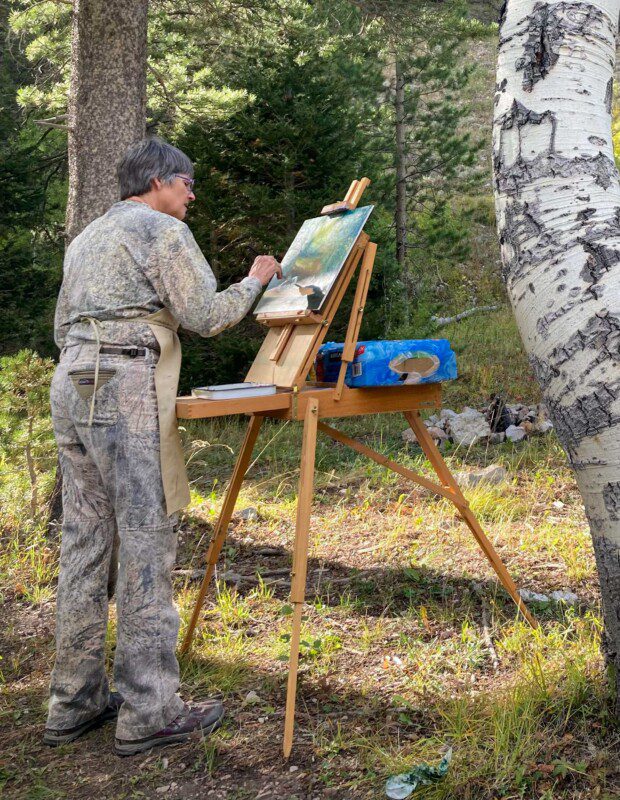
Karla had a 34-year career in federal land management—mostly with the BLM, but with some time working for the USFS on the Umpqua National Forest in Oregon. “I think this gives me an understanding of what it is like for staff on the ground,” she says. “My experience is that these are dedicated professionals who want to do the best they can but often don’t have the time or resources.” Karla sees Friends of the Bridger-Teton as an organization that can step in with additional resources, and, in dire circumstances, even staff. “I’m excited to help a place I love so much and that inspires me so much,” says Karla, who first engaged with FBT by creating original artwork for some of our events.
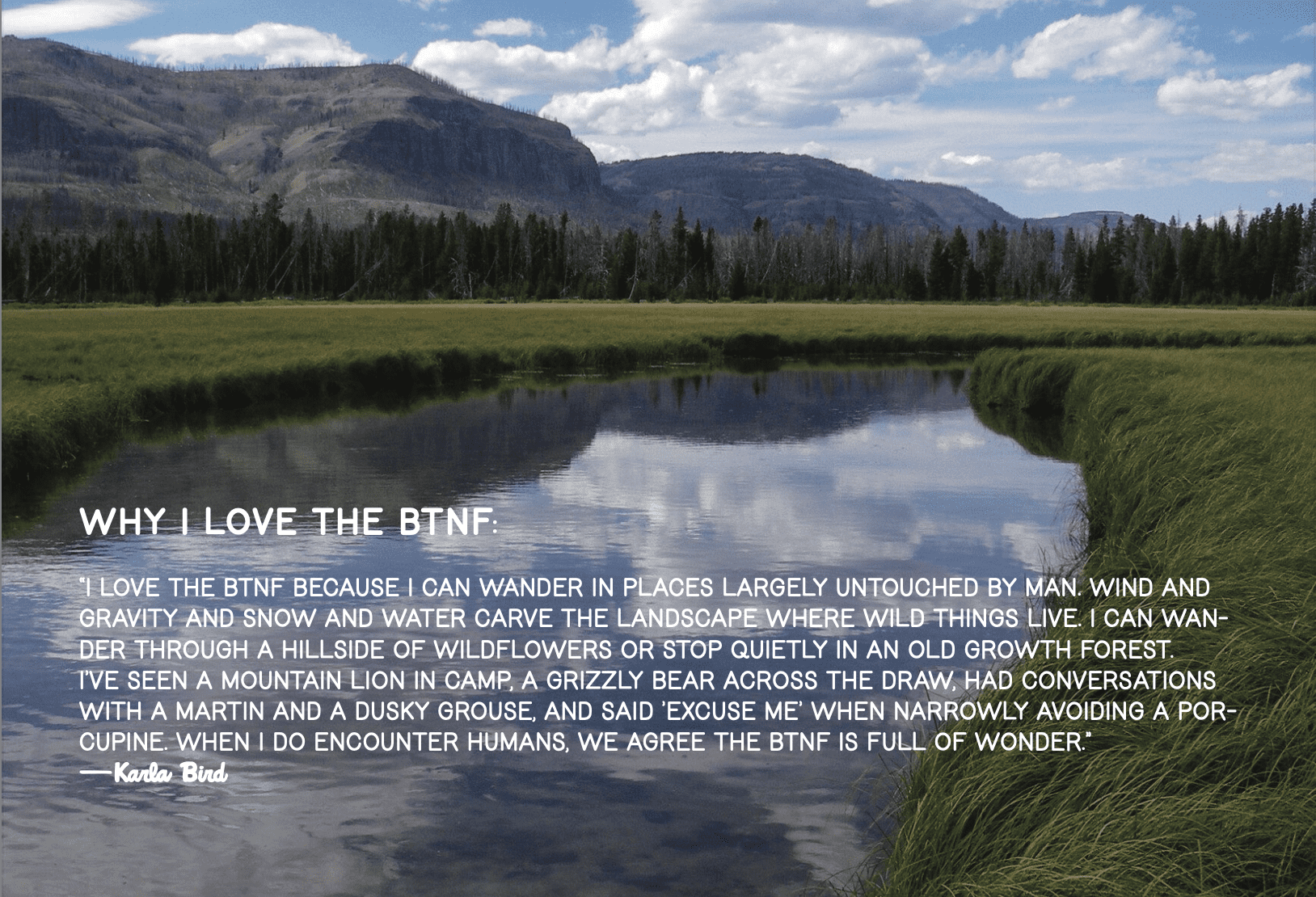
“In addition to camping in the Wyoming Range, we also camp at Elkhart Park for a couple of weeks in the summer. I’ve gotten some beautiful photographs up there that I use to inspire paintings,” she says. “I get absolute inspiration from the BTNF.”
Hunt Responsibly
Karla has hunted for decades; she has a few hunting tips to share:
—You must be in shape. Frank and I hike in the summer so that we can hunt in the fall.
—Harvest the animal that works for you. I’m 70 and Frank is 82 and we pack out what we kill on our backs. We don’t harvest the largest animals we see, but the largest that we can responsibly pack out.
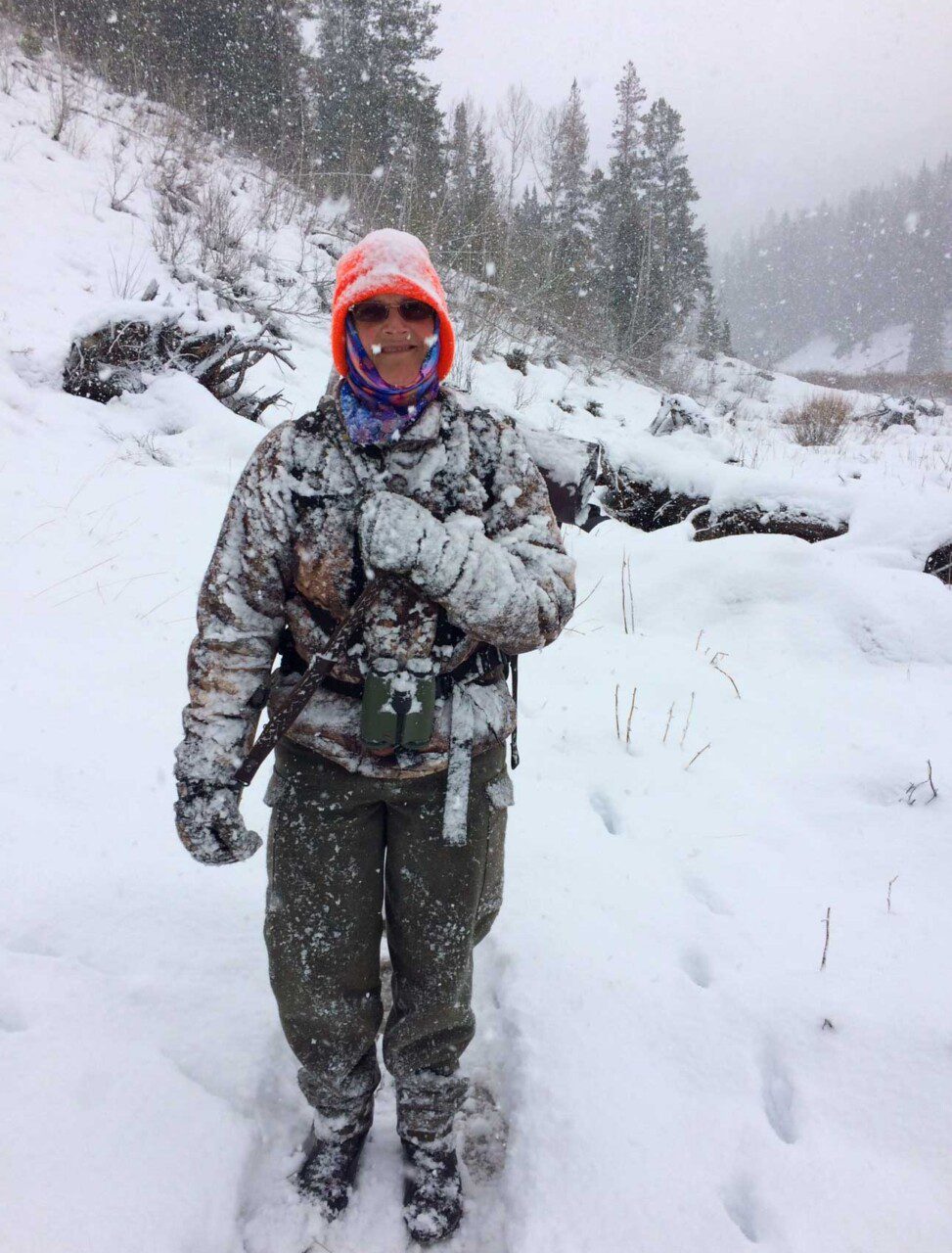 —Be very familiar with the area you hunt. It is important for hunters to scope out an area before the season. If you intend to go somewhere, you need to know how to safely travel through it and get out. There’s a place we’ve been hiking in that we call “Impossible Canyon” because it was so hard to get through. If we didn’t know how to get out safely, it could have been dangerous; and we choose not to hunt in impossible places.