Skip to Content
BTNF Alerts & Closures Current Fire Danger is High

Rain = Relief, but Fire Restrictions Stay

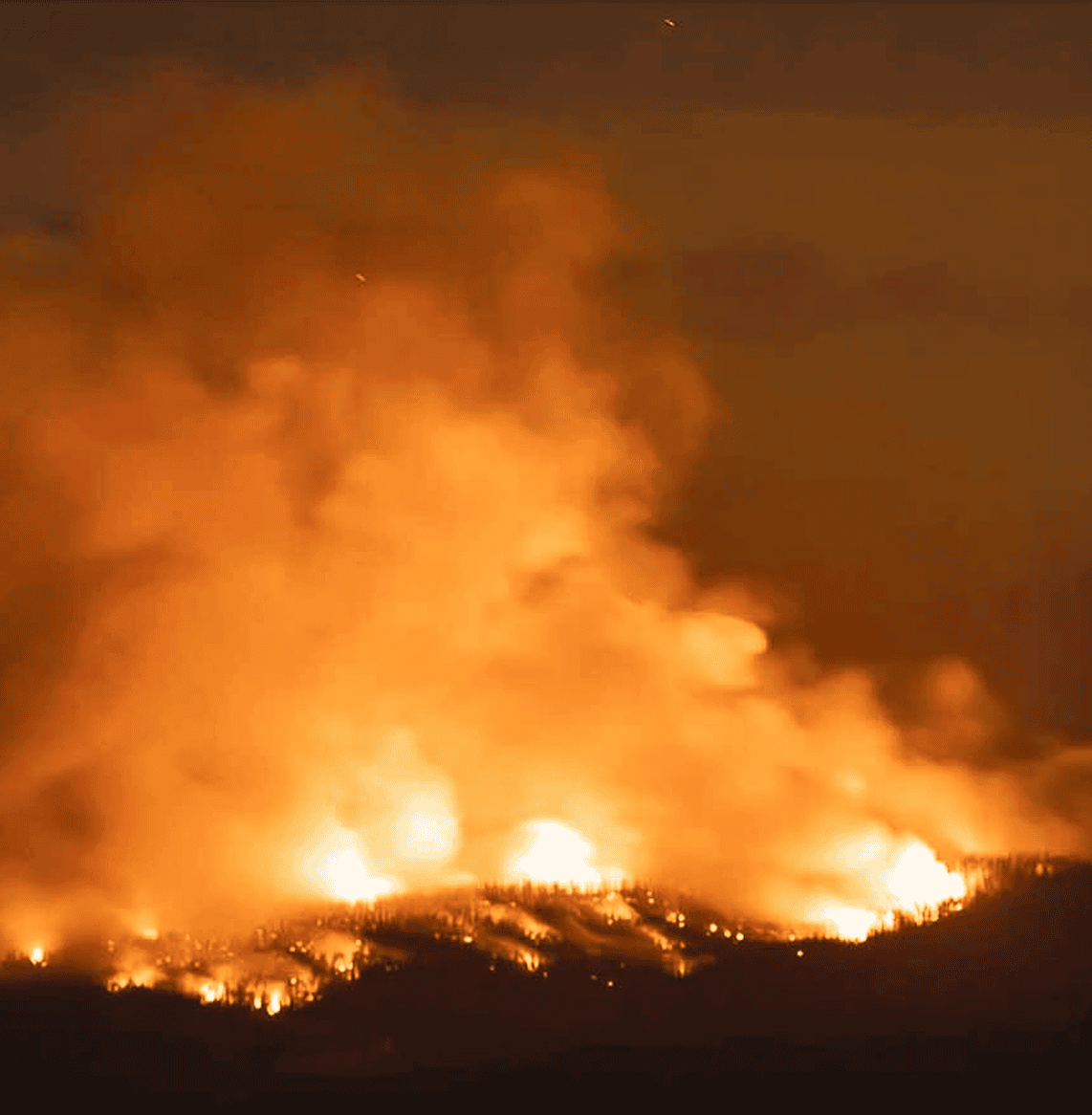
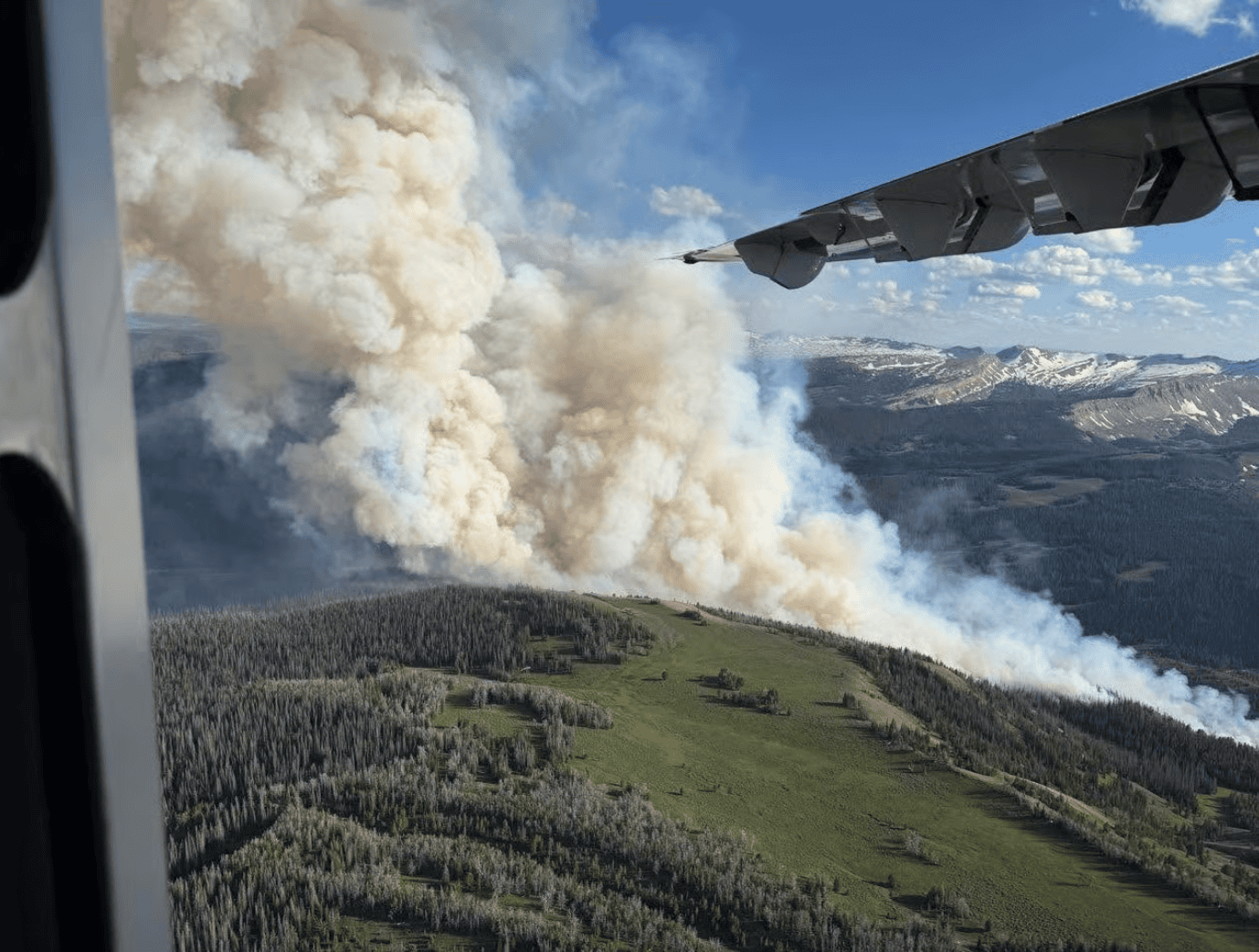
Northwest Wyoming is finally getting some cooler temps and rain, which is great news. But the rain does not mean that the stage 1 fire restrictions are being lifted.

An amazing amount of thought and variables go into determining whether there should be an area fire restriction.

The Bridger-Teton National Forest coordinates with 11 interagency partners, including the U.S. Wildlife Fire Service, Lincoln, Sublette, Sweetwater, and Teton Counties, and the Wyoming State Forestry Division, to discuss and potentially implement fire restrictions.

Local fire danger status is among the variables, but so are national conditions, including wildfire preparedness.

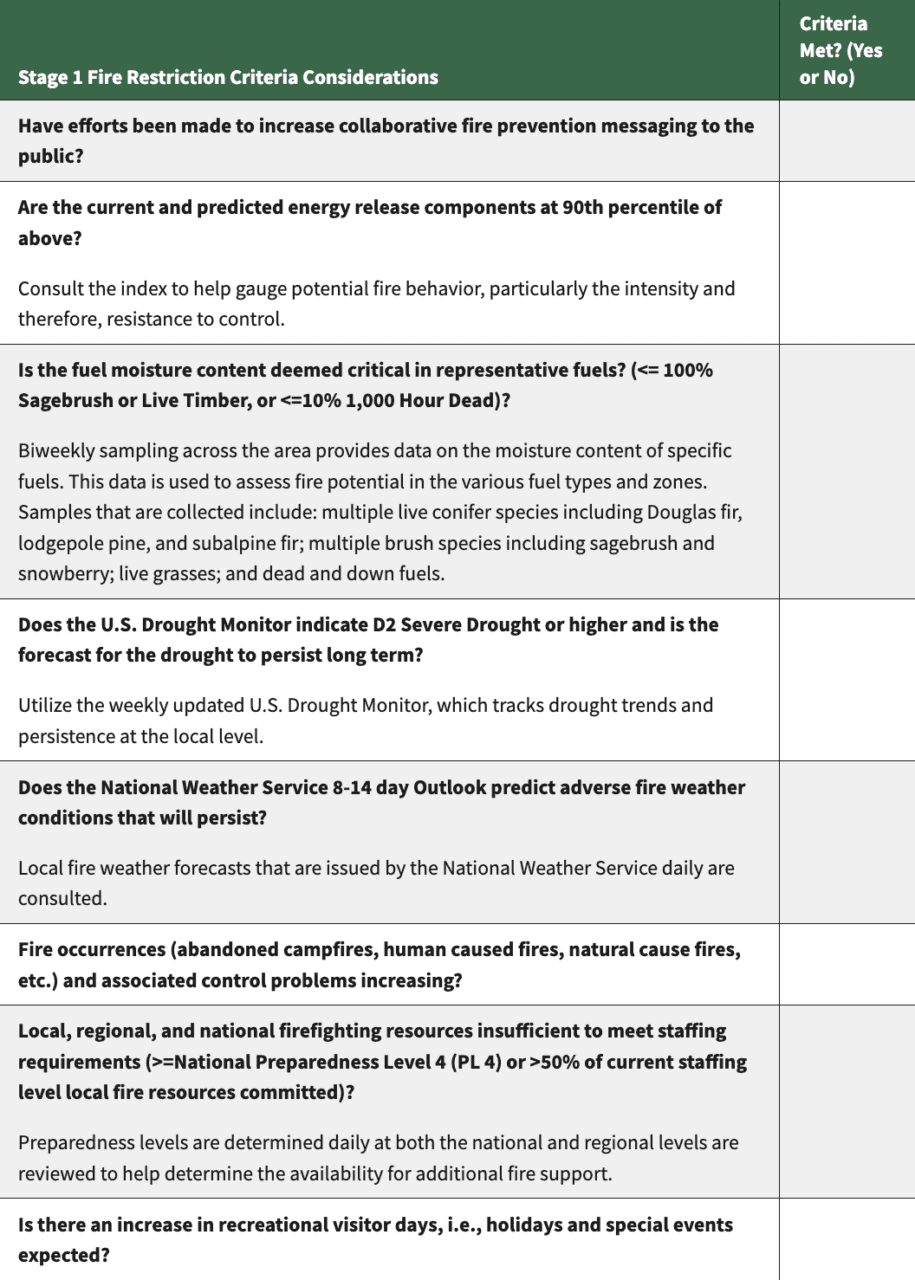
The following are questions fire managers from across Western Wyoming agencies consider when contemplating Stage 1 Fire Restrictions.
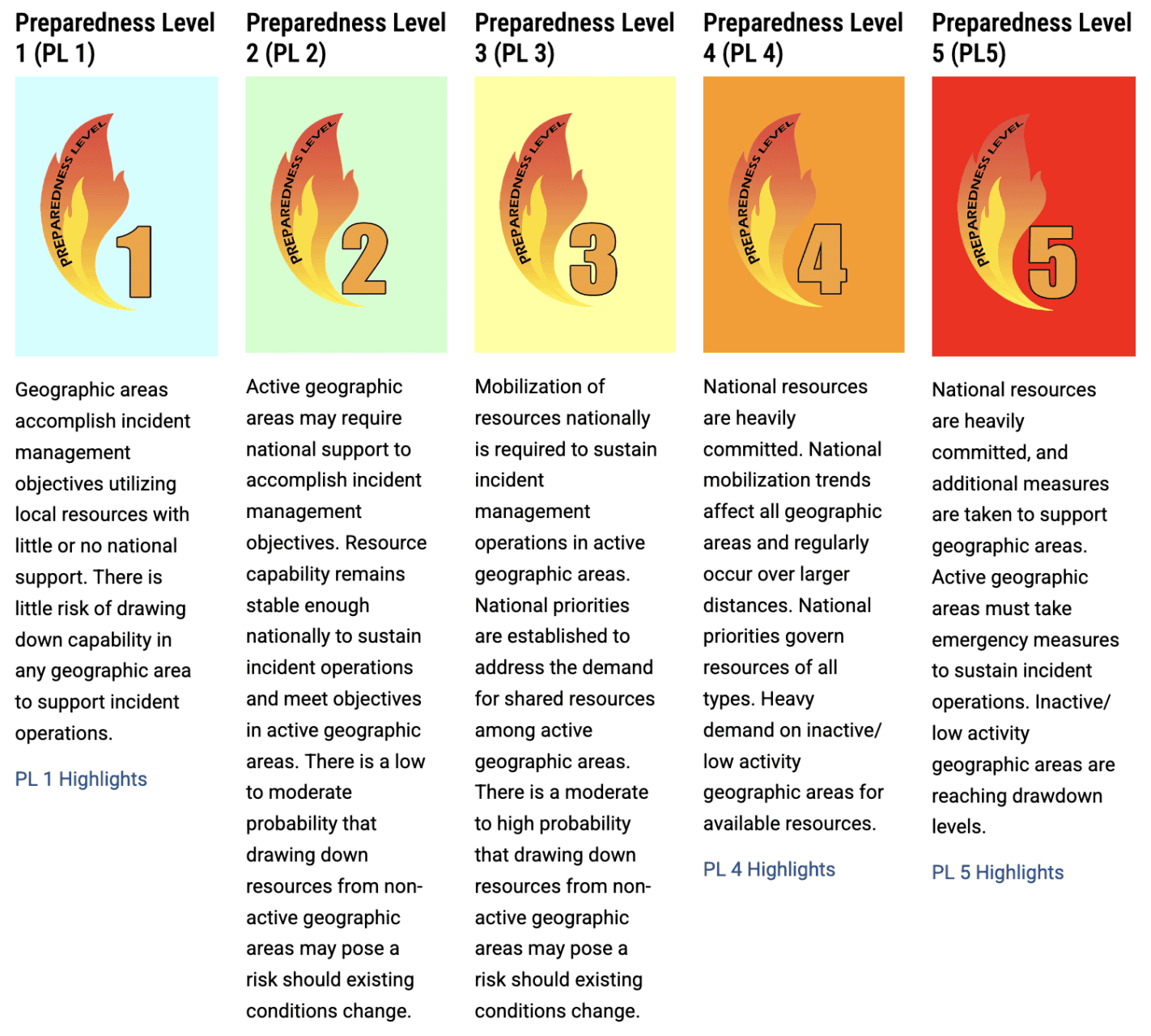
 

In late July, federal officials moved the national wildfire preparedness level to its highest level: a five out of five. These levels help agencies track what resources are available. “It’s a framework for determining resource allocation,” Craig Clements, director of the Wildfire Interdisciplinary Research Center at San Jose State University told Time magazine. “As the fire season progresses, those resources are used around the country by different agencies. When we get to level five, that means that resources are running low because there’s so many incidents ongoing.”

At level five, federal agencies might not have enough resources to address new fires. The National Interagency Fire Center (NIFC) previously declared a level 5 preparedness level in July of 2018, 2021, and 2024.

August 13, 2026, 126 new fires were reported nationwide, including 9 new large fires. Firefighters are currently working to contain 93 uncontained large fires, with 29,612 personnel assigned to incidents nationwide. So far in 2026, firefighters have responded to over 48,000 wildfires that have burned more than 6.5 million acres across the United States.

What does level 5 mean?

At level 5, national resources are already committed to fighting fires around the country. “The fire hazard is at its greatest, and the resources are at their most strained level,” Peter Sunderland, professor of fire protection engineering at the University of Maryland, told Time magazine. “If there are existing fires, they won’t pull anybody off those fires. But as new fires arise, the state managers can’t expect the same level of service that they’d get at level one through four. In other words, they may say we just can’t help with that new fire.”

That presents a new challenge, since fires are easier to put out in the first few hours after they start, a period of time known as the “initial attack.” “[Firefighters] try to get helicopters and crews on as soon as possible, so that way it doesn’t become a big fire,” Sunderland said in Time. “Once it becomes bigger and larger, it takes a lot more resources to contain that fire, and it takes a lot more time.”

Why conditions remain serious

This past winter was the second-warmest in U.S. history, with 19 states—including Nebraska, Oklahoma, and Texas—all experiencing one of their 10 driest winters on record, according to NOAA.

About 80% of Wyoming is in severe drought or worse—45% is suffering extreme drought, according to the U.S. Drought Monitor.

This year has already set a record for the number of fires. So far in 2026, the U.S. has seen 41,779 fires—the most one season has seen in the last 10 years.

Even though the recent rain might make it less likely that a fire starts on the BTNF—note that fire danger across the BTNF was still rated as “high” as of August 14—if a new fire starts, federal agencies might not have enough resources to address it.

That is why Stage 1 fire restrictions remain in place: it is not worth the risk.

We acknowledge with respect that our facilities are situated on the aboriginal land of the Shoshone Bannock. Eastern Shoshone. Northern Arapaho. Crow. Assiniboine. Sioux. Gros Ventre. Nez Perce.

Let's be friends; sign up for our newsletter

Name