
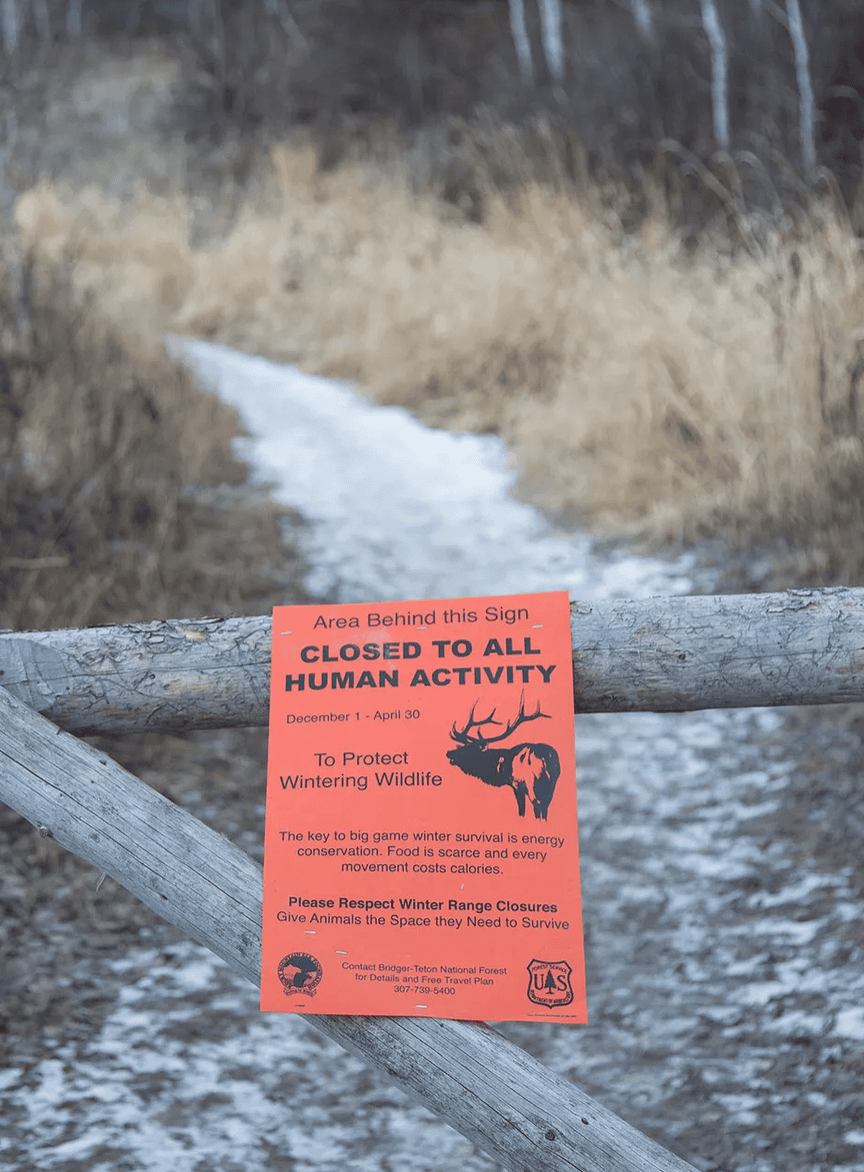
Just a few steps of post-holing in deep snow can be exhausting. You wallow around, searching for something firm to support your weight and keep you from sinking down to your crotch. Each step takes effort. Humans get to return to warm homes and a pantry full of food to rest and recuperate. Wildlife don’t have that luxury. That’s why select swaths of the BTNF are closed to humans in the winter. Most closures start Dec. 1. Dec. 1 also marks the transition from wheeled motor vehicle use to over-snow vehicle use and when leash requirements go into effect for dogs in select areas.
Giving Wildlife Room for Winter

Our Winter Playground, Wildlife's Home
When you startle a deer or moose in deep snow, making it run or change locations, you cause it to expend critical energy. “The reason we have winter wildlife closures in place is to protect wintering wildlife,” says Kyle Lash, the former senior game warden for Wyoming Game and Fish’s Jackson, South District. “When a skier or hiker startles an animal in the winter—if they’ve used up all their reserves, it’s likely that the animal will die in a day or two.” He says the months of March and April are particularly important to protect wildlife because by that time they’ve used up their fat reserves and any additional stress can be fatal.
“Most folks accept [winter-wildlife] restrictions because they see the value in it,” says Ashley Egan, a BTNF wildlife biologist. “People recognize this place is known for its iconic wildlife, and they appreciate that. When people know the reasons why [a place is closed] and understand the trade-off between winter recreation impacts and winter wildlife survival needs, they accept the restrictions.”
Find more information on winter travel restrictions here.

Dog Control Also Starts
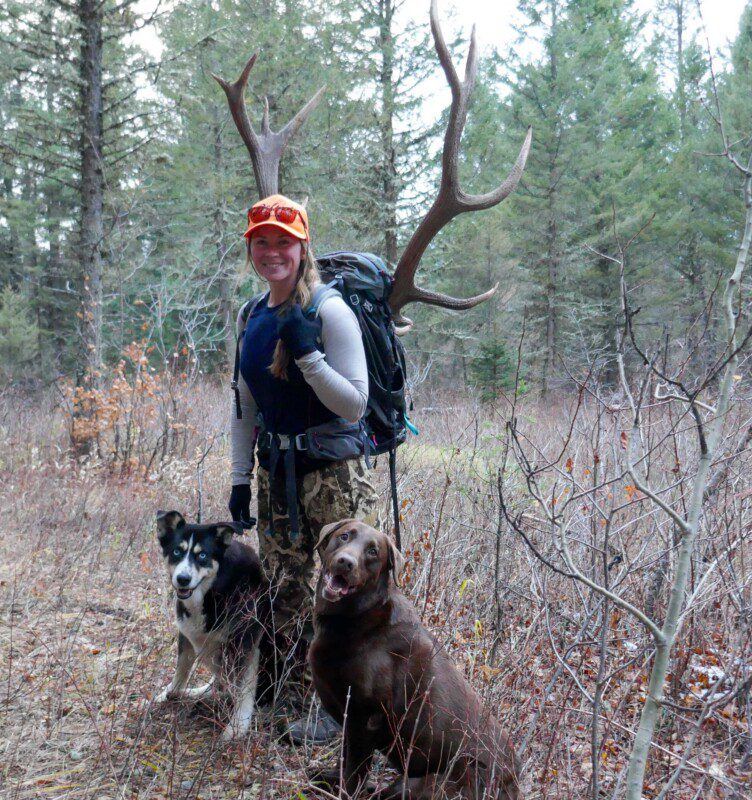
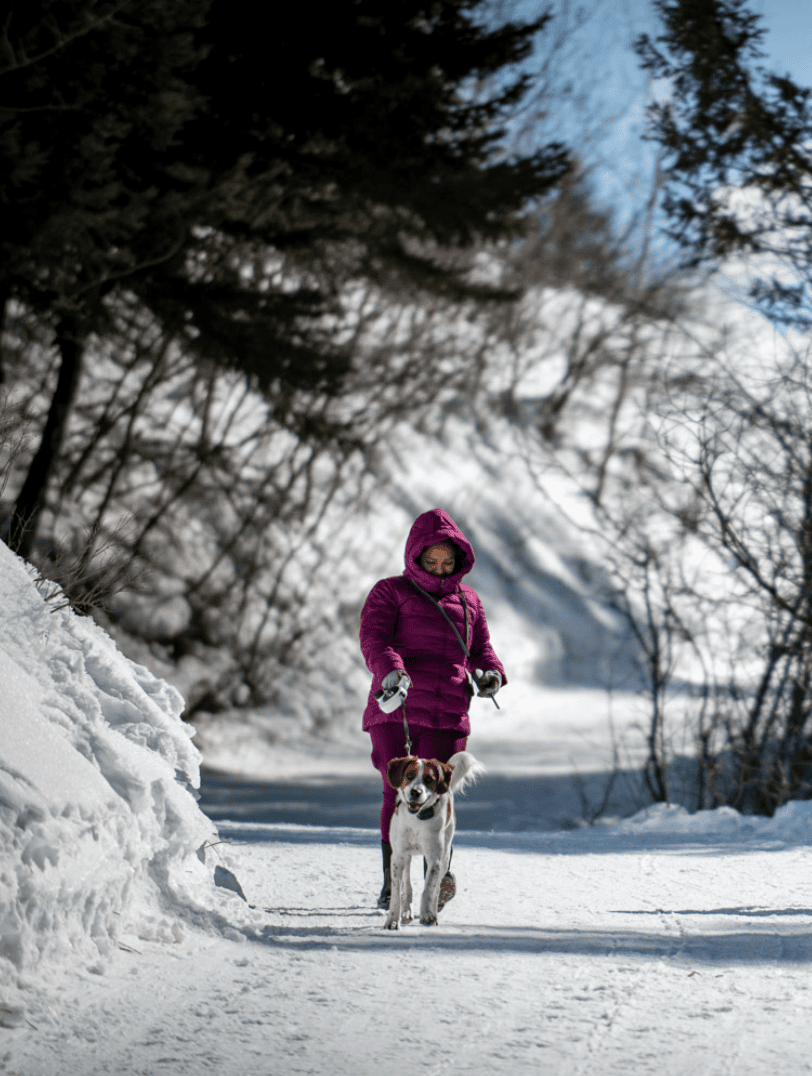
Dog control is especially important during winter because 1. Deer, elk, moose, and bighorn sheep view dogs as predators, causing them to run and expend energy critical for survival and 2. To keep your pet safe; there have been many unfortunate incidents of dogs being hit by vehicles or kicked and injured by wildlife.
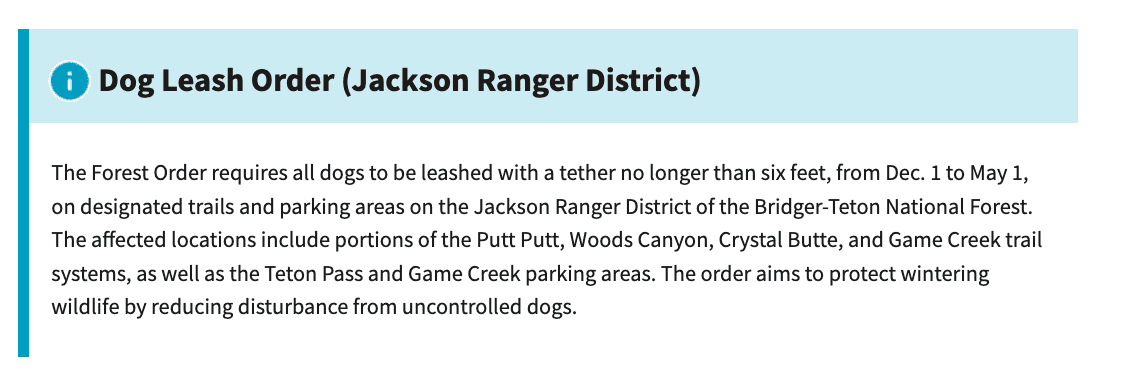
The Dog Leash Order goes into effect Dec. 1, and requires dogs to be leashed at listed developed trailheads on the Jackson District until May 1. This applies to Cache Creek, Trail Creek, and Teton Pass and in all areas adjacent to critical wildlife winter range on the Jackson District, including the Woods Canyon and Putt-Putt trails and the Game Creek drainage from the highway to a point 1.2 miles above the gate. (Off-leash dog areas are still available in many other Jackson locations, including Nelson Knoll Trail.)
Find more information on the dog control order here.
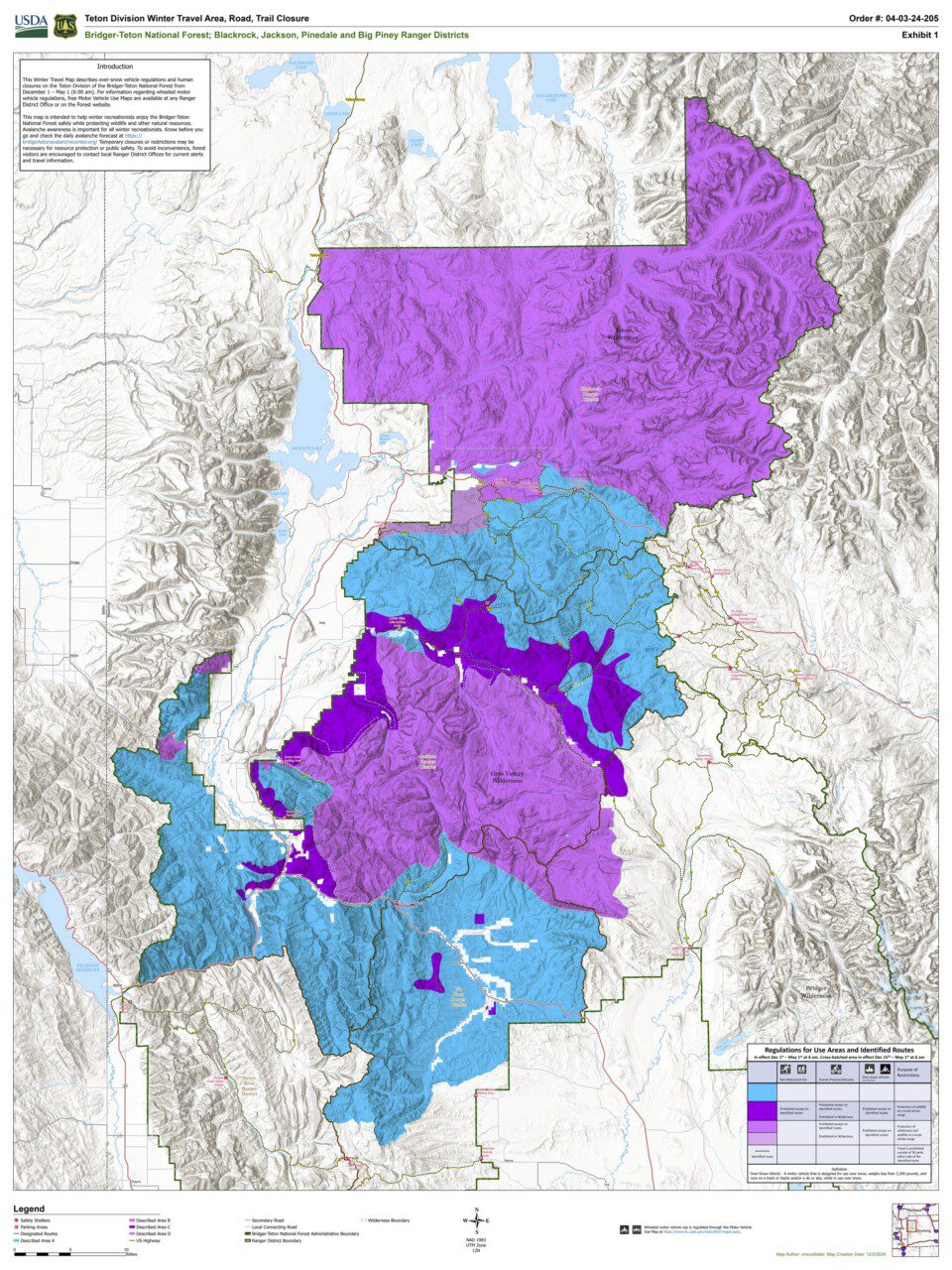
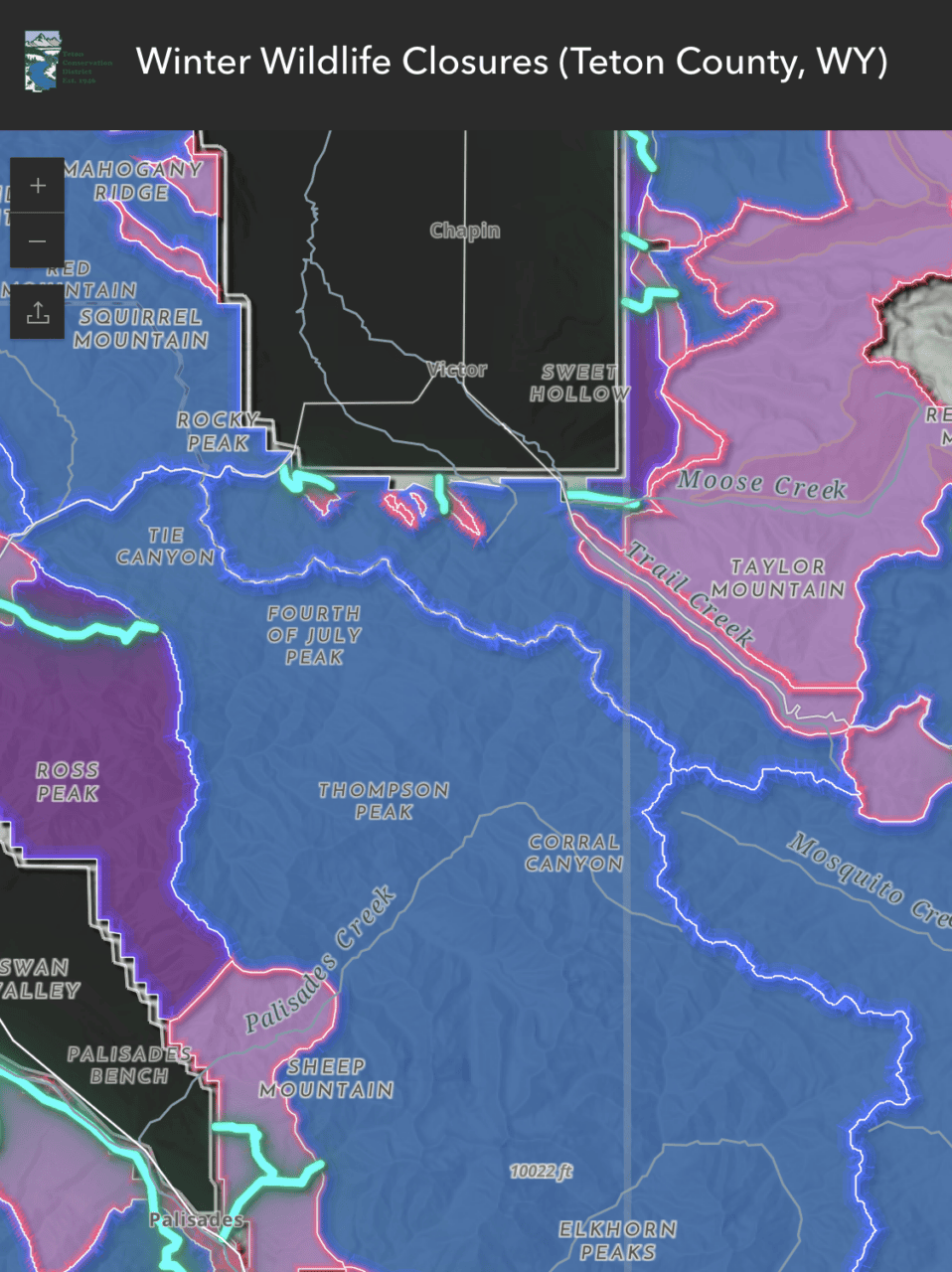
One Map, Many Jurisdictions
Until a couple of years ago, it was a challenge to find all of the areas that were closed in winter because so many different agencies were involved. (Closed areas are on the Bridger-Teton and Caribou-Targhee National Forests, Bureau of Land Management, Grand Teton National Park, National Elk Refuge, Teton County, Wyoming Game and Fish Department, and Wyoming Office of State Lands and Investments.)
“As a recreationist, it was difficult to know where they were,” says Morgan Graham, a GIS and wildlife specialist with the Teton Conservation District who spent more than 200 hours over three years to compile all the digital and paper maps from different agencies into a single dataset and online resource covering all of Teton County (which includes the BTNF’s Jackson and Blackrock Districts). “If that was confusing to me—someone experienced with maps—it had to be confusing for the general public.” Find Teton County Conservation District’s interactive online map here.